
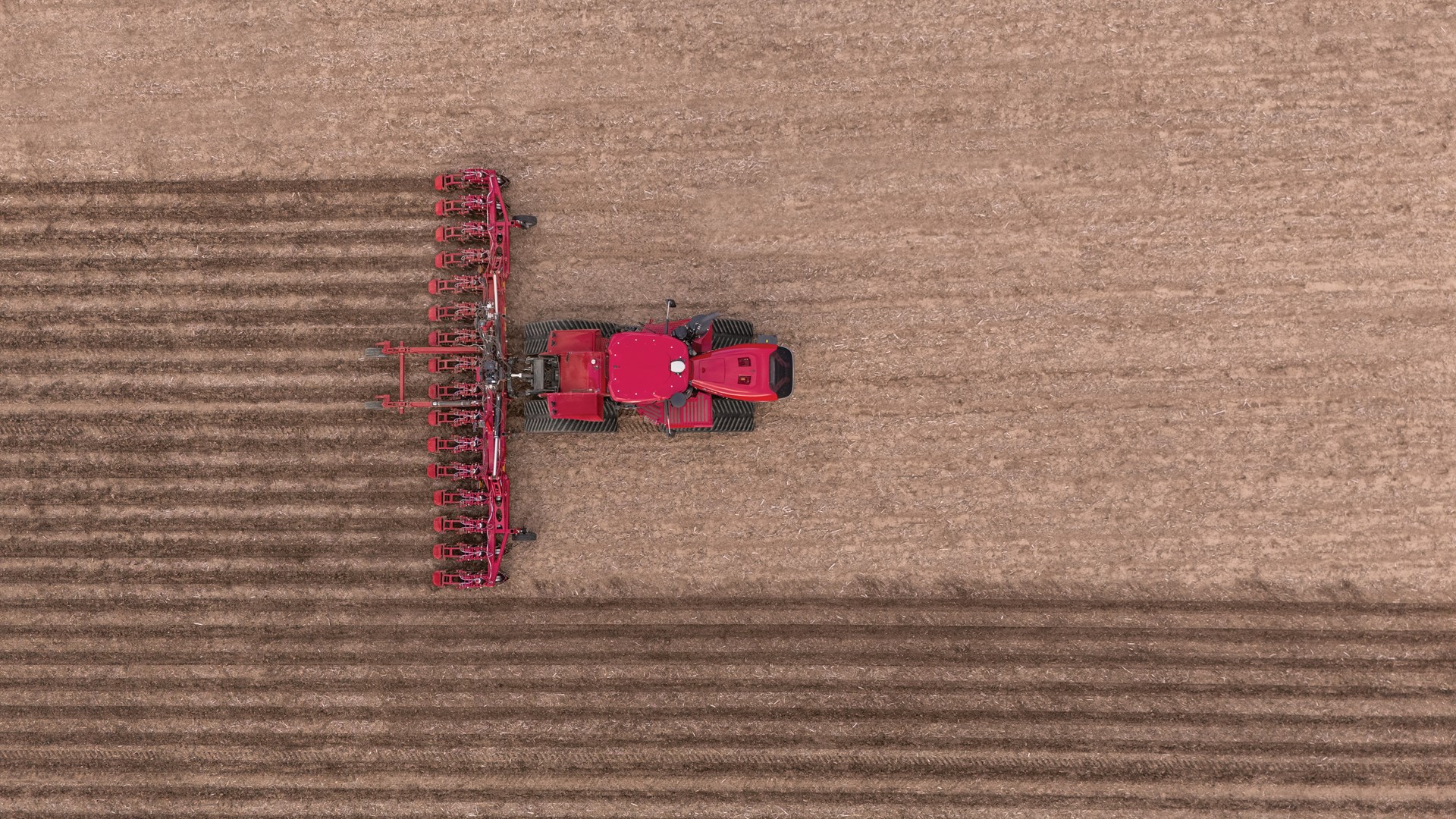
New 16-row folding mounted toolbar option helps farmers cover more acres efficiently and, when paired with a 2000 series Early Riser planter and Active Implement Guidance, supports precise placement, uniform emergence and long-term soil health. New knife/coulter row unit configuration expands product offering to meet additional consumer needs.
At a Glance
- New 16-row folding mounted toolbar configuration expands the Nutri-Tiller 1000 series lineup to meet a wider range of operational needs.
- Built on Agronomic Design principles to reduce field passes while boosting soil health, nutrients and water retention.
- Paired with a 2000 series Early Riser planter for uniform emergence, while Active Implement Guidance and Case IH FieldOps ensure precise inputs and simplified line management.
Built to create a consistent, agronomically correct strip that promotes strong emergence and yield potential, the Nutri‑Tiller 1000 series continues to evolve to meet the needs of today's producers. The introduction of a new 16‑row folding mounted toolbar configuration, as well as the knife/coulter option, provides operations with increased productivity while maintaining the strip quality they depend on.
Engineered to advance soil management as part of the Case IH Agronomic Design™ approach, the Nutri-Tiller 1000 series provides farmers the dual benefits of conservation-minded no-till farming and conventional tillage. By creating clean, precise strips, the Nutri-Tiller 1000 series leaves a protective layer of residue between the rows to prevent soil erosion from wind and water. Meanwhile, within the actual tilled strip, nutrient use efficiency is maximized by placing fertilizer in a concentrated zone directly where the root will grow. Together, the agronomic advantages help establish the ideal environment for crop development, supporting stronger emergence and greater yield potential while reducing fuel costs through fewer field passes.
"By offering the new 16-row folding mounted toolbar configuration on the Nutri-Tiller 1000 series, we are helping farmers cover more acres while improving soil health during a time where every minute counts,” said David Brennan, planter marketing manager at Case IH. “From there, pairing it with the 2000 series Early Riser® planter creates an ideal agronomic partnership for improving soil health and starting the season off strong.”
2000 series Early Riser and Nutri-Tiller 1000 series: a system built for soil health and early emergence
The Nutri-Tiller 1000 series creates uniform strips that improve planter ride quality by moving residue aside while keeping clean soil precisely in the planting path. When paired with a 2000 series Early Riser planter, this system protects the long-term productivity of the soil and establishes a strong seedbed for early, even emergence. Additionally, operators can control the residue managers directly from the cab, enabling real-time adjustments that ensure consistent strip cleanliness across the entire field and eliminate the need for extra tillage passes.
The 2000 series Early Riser row unit engages the soil to deliver precise seed placement, consistent depth control and optimal seed-to-soil contact directly within the strips created by Nutri‑Tiller 1000 series strip-till bar. Built on the same Case IH Agronomic Design principles, the Nutri‑Tiller 1000 series and 2000 series Early Riser planter system work together to create and maintain the ideal growing environment from strip formation through seed placement, helping maximize emergence, support strong root development and unlock greater yield potential.
Extending that system approach beyond the row unit, Case IH FieldOps™ and Active Implement Guidance help ensure the planter follows the same path as the strip-till pass. Farmers can store and share guidance lines across their fleet through FieldOps, while Active Implement Guidance automatically corrects implement drift in real time, helping maintain precise strip-to-planter alignment, while reducing crop damage and soil compaction.
"By combining tillage, planting and guidance into one seamless agronomic ecosystem, we are helping farmers build healthier soils, reduce operating costs and boost yield potential," Brennan added.
To learn more about Case IH agronomic solutions, visit Case IH at Farm Progress Show booth #102, visit caseih.com or talk with your local Case IH dealer.
###
Frequently Asked Questions
How can farmers improve soil health and reduce operating costs?
Farmers can implement strip tillage, which offers benefits of both conventional tillage and no-till. Case IH offers a seamless system combining advanced tillage, planting and guidance technology. This integrated approach protects long-term soil productivity, lowers fuel consumption and establishes a strong seedbed for early, even emergence.
What configurations are available for the Nutri-Tiller 1000 series?
The Nutri-Tiller 1000 series is available in various configurations to meet farmers’ varying needs, including the Nutri-Tiller 1010 6-row rigid mounted toolbar and the Nutri-Tiller 1030 8-, 12- and new 16-row folding mounted toolbar.
What are the benefits of the Nutri-Tiller 1000 series?
Nutri-Tiller 1000 series offers the dual benefits of conservation-minded no-till farming and conventional tillage. It creates clean, precise strips with ideal berm shapes while leaving protective residue between the strips. By requiring fewer field passes, the Nutri-Tiller directly reduces fuel costs, while helping unlock higher yield potential.
What is Active Implement Guidance?
By sharing a single guidance line between the tractor and implement, Active Implement Guidance allows both to independently steer toward the same precise path. This keeps the implement exactly where it needs to be, delivering consistent accuracy from pass to pass and season to season.
What is Agronomic Design?
Agronomic Design is the philosophy to help farmers make the most of their seed and soil. It's an integrated approach that combines equipment, technology and agronomic principles to protect and improve soil health, maximize potential yields and increase return on investment across every stage of the crop cycle.